

Western Edge
"Western Edge: The Roots and Reverberations of Los Angeles Country-Rock," an exhibition at the Museum, was open from September 2022 to September 2025. The exhibit traced the Los Angeles-based communities of visionary singers, songwriters and musicians who, between the 1960s and 1980s, frequented local nightclubs, embraced country music, created and shaped the musical fusion “country-rock” and, ultimately, made a lasting impact on popular music.
Western Edge surveyed the rise of the Byrds, Buffalo Springfield, the Flying Burrito Brothers, Poco, Eagles, Emmylou Harris, Nitty Gritty Dirt Band, Linda Ronstadt and many others who, in the 1960s and ’70s, found commercial success with new sounds that merged rock & roll rhythms and attitude with country and bluegrass instrumentation and harmonies. As they flourished, so did the Los Angeles-based recording industry.
These trailblazers’ musical contributions were expanded upon by the next generation of Los Angeles roots music performers—the Blasters, Rosie Flores, Los Lobos, Lone Justice, Dwight Yoakam, and more—who once again looked to traditional American music for inspiration. Blending hard-edged honky-tonk, Mexican folk music, rockabilly, and punk rock, these artists—along with their country-rock predecessors—provided inspiration to future generations of country and Americana artists.

Featured Videos
A performance celebrating the opening of the major exhibition took place Friday, September 30, 2022, in the Country Music Hall of Fame and Museum’s CMA Theater.
Chris Hillman’s live performance of “Wheels,” featuring Sara and Sean Watkins of Watkins Family Hour.
“Western Edge: The Roots and Reverberations of Los Angeles Country-Rock,” a companion catalog to the major multi-year exhibition of the same name. This lavishly illustrated catalog traces the impact of the Byrds, Buffalo Springfield, the Eagles, Emmylou Harris, Linda Ronstadt, and many more.
Thursday, July 20, 2023 the Museum celebrated the reunion of the Flying Burrito Brothers’ four Nudie suits—the iconic suits featured on the album cover of The Gilded Palace of Sin. Together again for the first time in more than half a century, Chris Ethridge’s long-lost suit was reunited with the other three in a special ceremony featuring a live musical performance and remarks by Michael Gray, senior vice president of Museum Services, and Necia Ethridge, daughter of Chris Ethridge. The four suits were on display as the centerpiece of the exhibit.
“A new hybrid sound grew from humble beginnings in a few small L.A. nightclubs and quickly emerged as one of the most popular musical styles in America.”
Youth-driven, creative communities—formed in renowned L.A. clubs such as the Ash Grove and the Troubadour and the enclaves of Laurel Canyon and Topanga Canyon—found connection through a love of the stirring harmonies, instrumental virtuosity, and the honest storytelling of country music. The scene encouraged collaboration, with a healthy dose of competition. The artists and musicians spurred one another to write better lyrics, craft tighter harmonies, and master their instruments. By the 1970s, the polished, melodic, narrative-driven songs topped the radio charts, and acts such as Crosby, Stills, Nash & Young, Linda Ronstadt, and the Eagles were destined for superstardom.
As country-rock reached its zenith in the late ’70s, the emerging L.A. punk-rock scene spurned slick production in favor of a raw, rebellious, do-it-yourself approach. Punk clubs provided common ground for a new generation of rock musicians whose revved-up music channeled the grit and vitality of older American roots styles in a potent blend that prefigured the creation of the Americana genre.
“A new hybrid sound grew from humble beginnings in a few small L.A. nightclubs and quickly emerged as one of the most popular musical styles in America,” said Kyle Young, chief executive officer for the Country Music Hall of Fame and Museum. “Western Edge examines times of boundary crossing and great creativity, when musicians were inspired by, but not limited by, a love of tradition.”
To tell this sweeping, multi-layered story, museum’s curatorial and creative teams researched the history for three years, conducted more than forty hours of filmed interviews, and collected an array of significant, rarely seen artifacts for display, including stage wear, instruments, vintage posters, original song manuscripts, and more.

Western Edge Exhibit Highlights
-
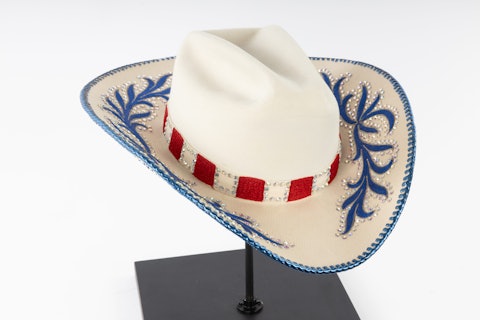
Adorned with embroidery and rhinestones, this customized Stetson hat was part of a spectacular stage costume designed by Nudie’s Rodeo Tailors for Michael Nesmith when he was in the Monkees.
-
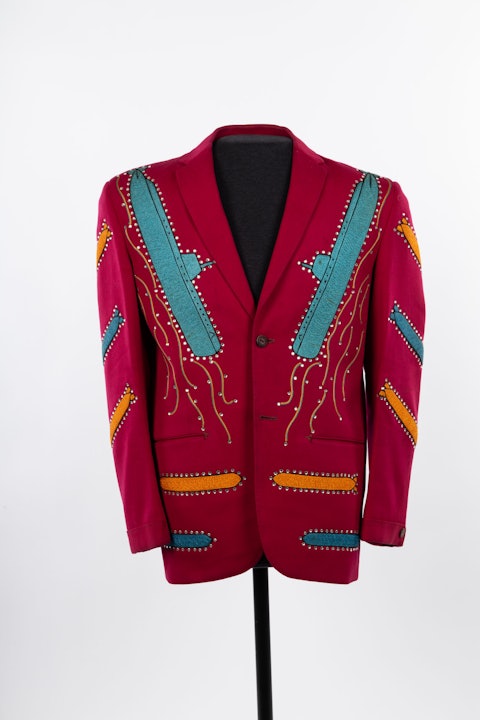
Nudie’s Rodeo Tailors designed this jacket, embellished with rhinestones and embroidered submarines and torpedoes, for Gram Parsons when he was in the International Submarine Band, c. 1967. Parsons later gave it to his friend and former bandmate, drummer Jon Corneal.
-
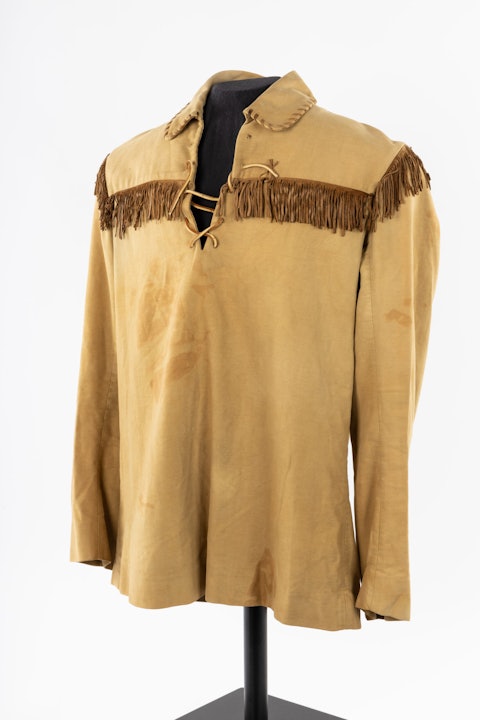
At their shows in the early 1960s, all four members of the Dillards appeared in matching faux-buckskin shirts like this one worn by guitarist Rodney Dillard.
-
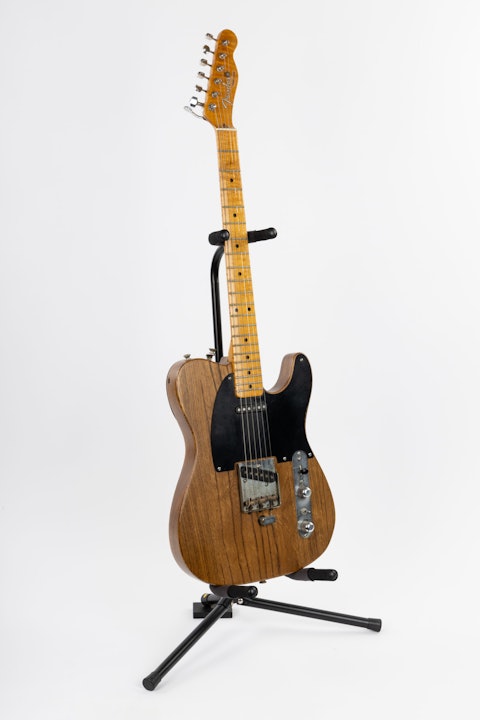
Eagles lead guitarist Bernie Leadon used this extensively modified 1962 Fender Telecaster onstage and in the studio, including on the group’s recordings of “Take It Easy,” “Peaceful Easy Feeling,” and “Tequila Sunrise.” The instrument features a B-bender mechanism that enables the player to replicate the twang of a pedal steel guitar by bending and raising the pitch of the guitar’s B string.
-
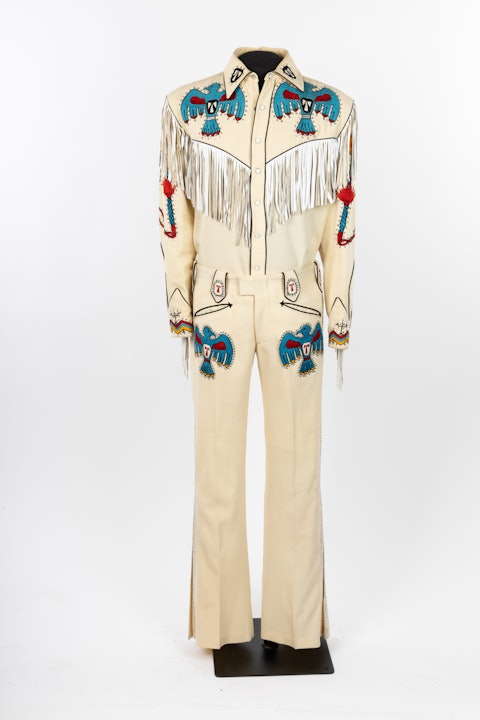
Nudie’s Rodeo Tailors designed this western shirt and pants ensemble—embellished with piping, rhinestones, contrasting leather fringe, and embroidered thunderbirds and other motifs inspired by Native American art—for singer, songwriter, and guitarist Richie Furay of Poco, c. 1969.
-
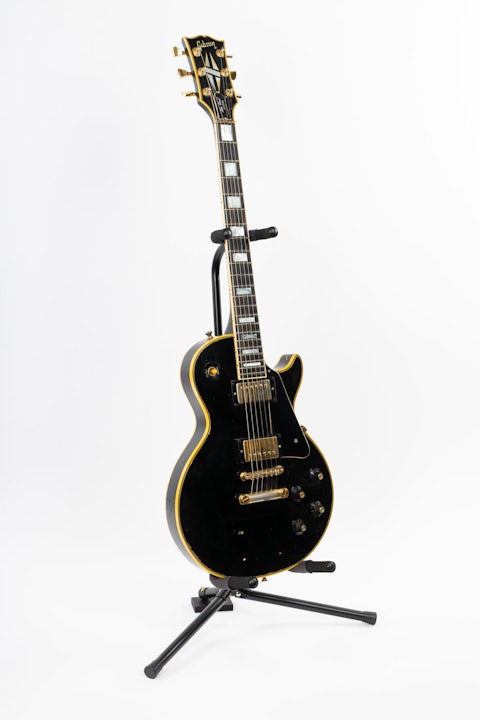
This 1969 Gibson Les Paul Custom electric guitar with gold-plated hardware was used by Rick Nelson while leading his country-rock group, the Stone Canyon Band. He was pictured holding it on the cover of his 1972 album, Garden Party.
-
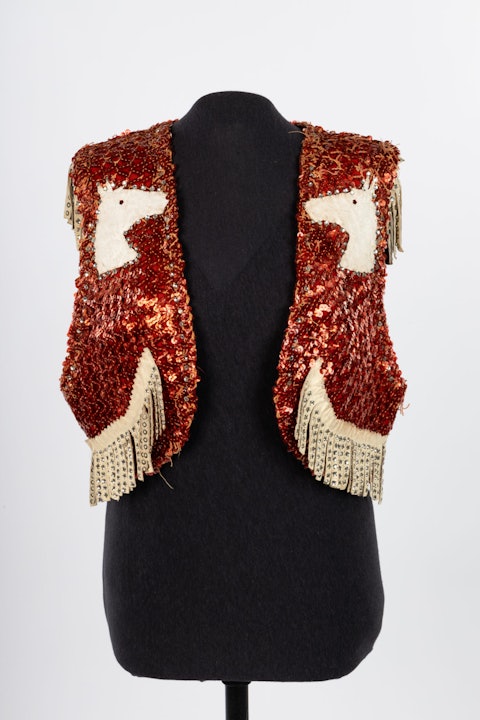
Embellished with rhinestones, leather fringe, and appliquéd leather horse heads, this sequined vest from Nudie’s Rodeo Tailors has been worn onstage by Emmylou Harris, Linda Ronstadt, and Rosie Flores. The vest was designed for actress Gail Davis, star of the popular 1950s TV Western series Annie Oakley, but she never picked it up from Nudie’s North Hollywood shop, where Harris purchased it in the early 1970s. Harris later gave it to Flores.
-
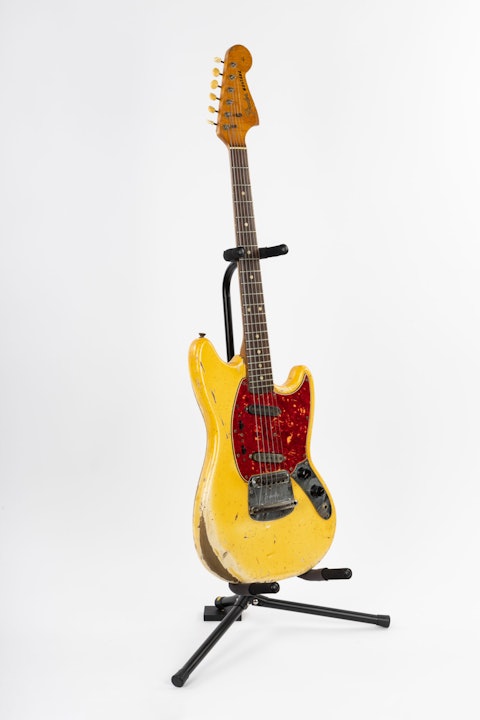
This battered 1964 Fender Mustang with Schecter pickups was Dave Alvin’s primary guitar onstage with the Blasters and the Knitters. The first electric guitar owned by Alvin, the Mustang was a gift from blues musician James Harman.
-
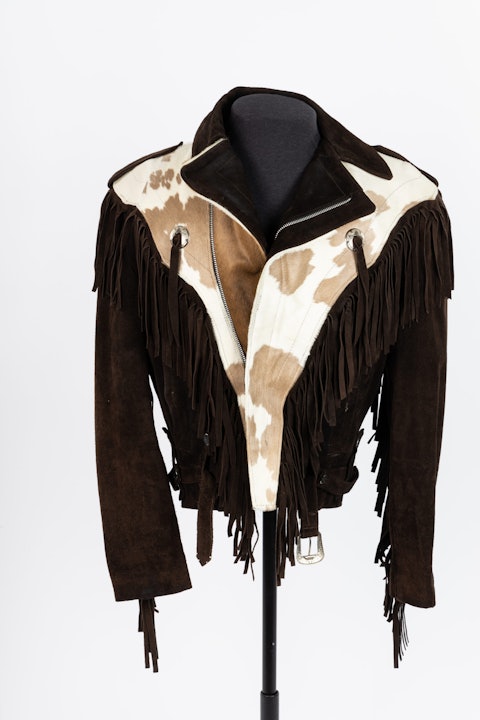
Dwight Yoakam wore this Mex Tex brand suede jacket, embellished with fringe, cowhide yoke overlay, and conchos, in the 1986 music video for “Honky Tonk Man,” his debut single and breakout hit.
-
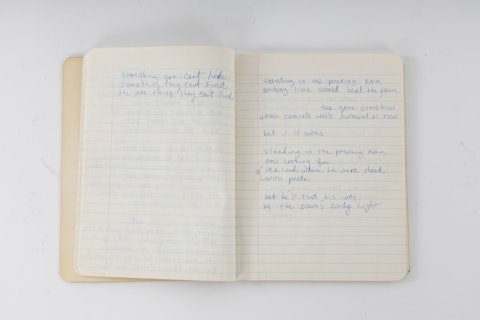
The primary songwriters of the group Los Lobos, guitarist David Hildalgo and drummer Louie Pérez, used this composition book to write lyrics to “Will the Wolf Survive” (pictured here) and other songs recorded by the band.
-
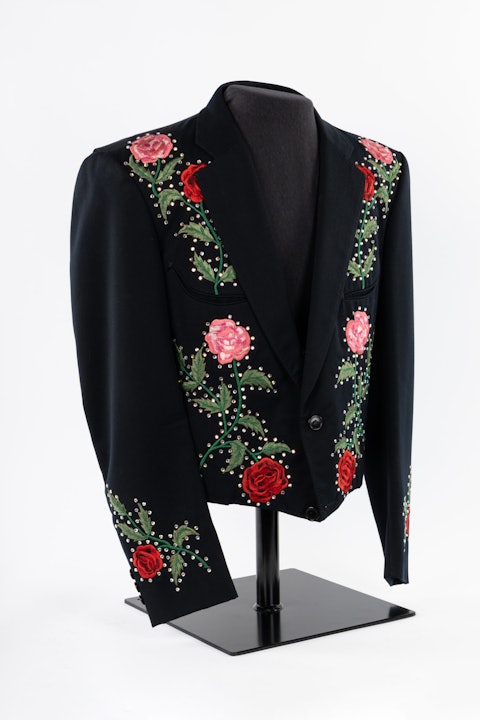
Chris Hillman—a founding member of the Byrds, the Flying Burrito Brothers, Desert Rose Band, and other groups—wore this custom-designed Manuel bolero jacket embellished with rhinestones and embroidered roses when he led the Desert Rose Band.
-
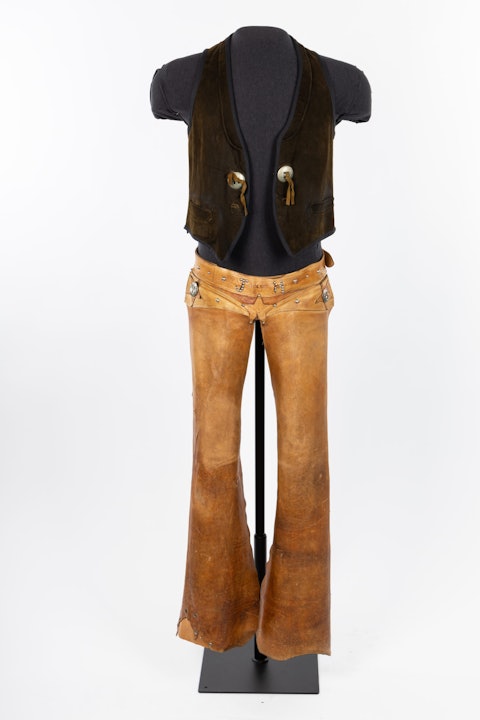
Jeff Hanna of the Nitty Gritty Dirt Band wore this suede vest and these leather chaps on the cover of the group’s 1972 album All the Good Times.