Carl
Smith
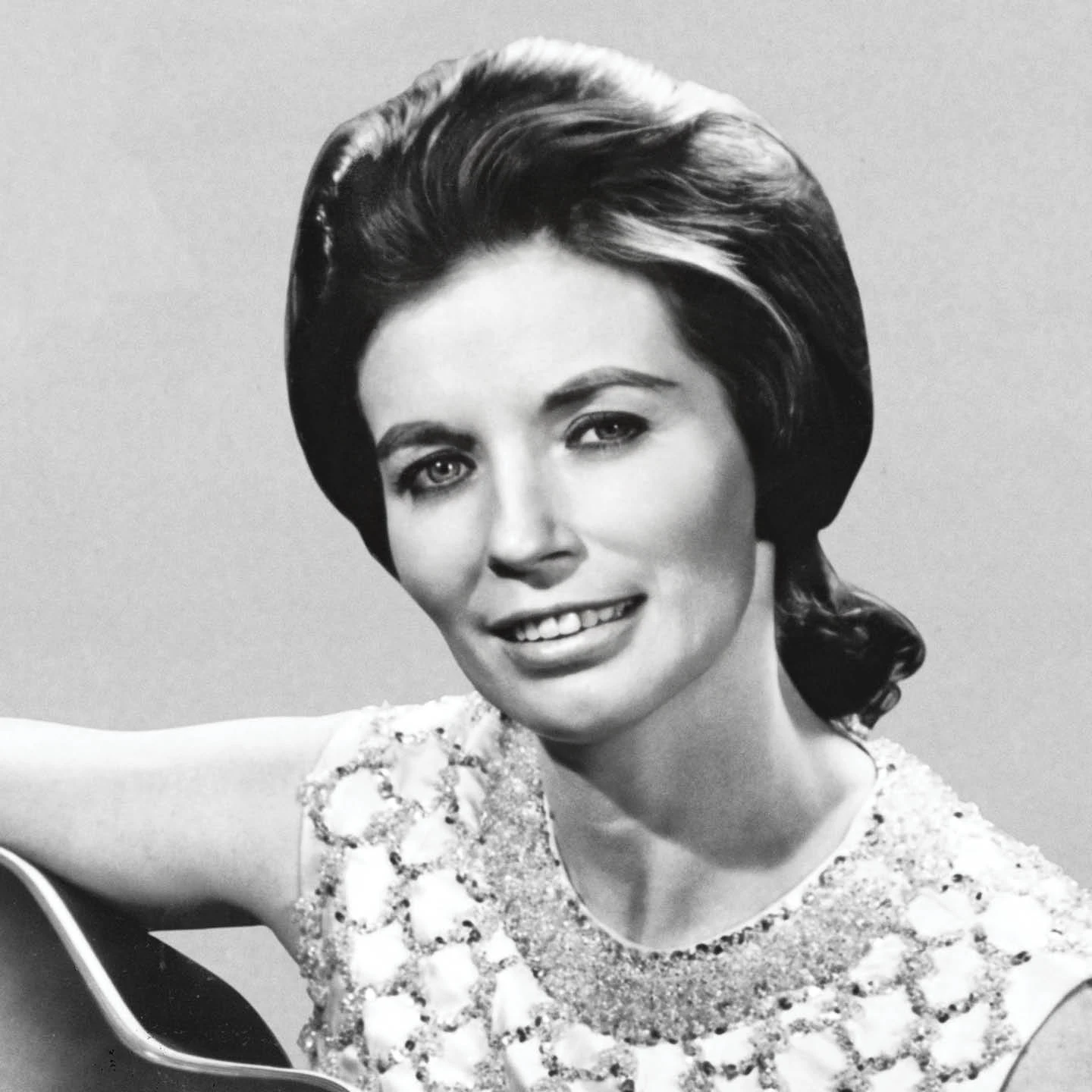
A second famous son of Maynardville, Tennessee—Roy Acuff being the first—Carl M. Smith was one of country music’s most popular hitmakers of the 1950s and 1960s.

-
Inducted2003
-
Born
March 15, 1927
-
Died
January 16, 2010
-
Birthplace
Maynardville, Tennessee
A second famous son of Maynardville, Tennessee—Roy Acuff being the first—Carl M. Smith was one of country music’s most popular hitmakers of the 1950s and 1960s.
Finding his place
Smith grew up listening to the Grand Ole Opry and daily country broadcasts on Knoxville stations. In 1944, Cas Walker gave him his first radio work on Knoxville’s WROL. As singer, guitarist, and sometimes bass player, Smith worked with the Knoxville band the Brewster Brothers after military service and then, between 1947 and 1949, moved many times between Knoxville, Asheville, North Carolina, and Augusta, Georgia.
WROL to WSM
He was back at WROL, working in Archie Campbell’s band when Knoxville dobro player George “Speedy” Krise made a demo of Smith’s singing and sent it to Troy Martin, who was not only a publishing representative for Peer-Southern Music in Nashville, but also a valued talent scout for Columbia Records producer Don Law. Martin liked Smith’s singing and arranged an audition with program director Jack Stapp of Nashville radio station WSM. After some WSM guest appearances in March 1950, Stapp gave Smith a six-day-a-week morning show in May, with Opry appearances every third week. Don Law signed Smith to a Columbia contract on May 5, and six days later, Smith held his first session in Nashville’s Castle Studios.
Songs
00:00 / 00:00
00:00 / 00:00
00:00 / 00:00
WSM took time to develop Smith as a young artist. A year passed before his first hit, but they soon came with regularity—intense love songs, for the most part, suitably framed by bandsman Johnny Sibert’s crying steel guitar. “Let’s Live a Little” “Mr. Moon” and “If Teardrops Were Pennies” all made the charts in 1951.
Friends on the Grand Ole Opry helped Smith along. Hank Williams let Smith record his “Me and My Broken Heart” and “There’s Nothing as Sweet as My Baby.” Ernest Tubb, with whom Smith did some of his earliest touring, brought him Jack Henley’s “(When You Feel Like You’re in Love) Don’t Just Stand There,” which became Smith’s second #1 hit, preceded by “Let Old Mother Nature Have Her Way,” his biggest-selling single.
Triple crown hit maker and television star
For the next few years, each of his records made the Top Twenty—sometimes both sides of a single. His rendition of the Louvin Brothers original “Are You Teasing Me” went to #1 in 1952, and its flip side, Boudleaux & Felice Bryant’s “It’s a Lovely, Lovely World,” went to #5. The Bryants also supplied Smith with “Just Wait ’Til I Get You Alone” (1953), “Hey Joe!” (1953), and “Back Up Buddy” (1954). Four of his releases, culminating in Freddie Hart’s “Loose Talk,” were “Triple Crown Winners,” reaching #1 on all three of Billboard’s country charts in that era—reflecting jukebox play, retail sales, and radio exposure.
Smith left the Grand Ole Opry toward the end of 1956, amid a flurry of behind-the-scenes politics, to take star billing on the Philip Morris Country Music Show, a free, touring show sponsored by the cigarette maker that ran for almost two years in 1957 and 1958. Television became a favored venue for the handsome Smith. He frequently guested on Red Foley’s Jubilee U.S.A., and in 1961, was co-host of its follow-up series, Five Star Jubilee. Between 1964 and 1969, Smith’s regular TV exposure crossed the border into Canada: He hosted 190 episodes of Carl Smith’s Country Music Hall.
Thankful vally
Despite his TV stardom, Smith placed at least one record on the country charts every year between 1951 and 1973, virtually his entire recording career with Columbia Records. Briefly coaxed back into recording in the late 1970s for Hickory Records, Smith gradually gave up touring and recording to live the life of a gentleman horse breeder on the beloved 287 acres he called Thankful Valley near Franklin, Tennessee.
Twice married to country music performers, Smith and his first wife, June Carter (1952–1956; died in 2003), were parents to country star Carlene Carter. In 1957 Smith married Goldie Hill, Decca Records’ Golden Hillbilly, and, at the time of their wedding, a co-star on the Philip Morris Country Music Show. They were married until Hill died in 2005.
Smith was inducted into the Country Music Hall of Fame in 2003. He died in 2010.
–Ronnie Pugh
– Adapted from the Country Music Hall of Fame® and Museum’s Encyclopedia of Country Music, published by Oxford University Press.
Carl M. Smith was the second famous son of Maynardville, Tennessee—Roy Acuff was the first—and was one of country music’s most popular hitmakers of the 1950s and 1960s.
Photos
-

Carl Smith and band. Photo by Walden S. Fabry.
-

Carl Smith and Tunesmiths. Photo by Walden S. Fabry Studios.
-

June Carter and Carl Smith, 1953. Photo by Gordon Gillingham.
-

Carl Smith at Bradley Studios, 1957. Photo by Jeanne Gordon Studio.
-

Carl Smith performing, 1955-1959. Photo by Elmer Williams.
-

Carl Smith performing on the set of The Country Show, 1956. Hubert Long Collection.
-

Carl Smith with guitar and records. General Collection.
-

Carl Smith studio portrait, 1956. Walden S. Fabry Studios.
-

Carlene Carter and Carl Smith on Nashville Now, 1990. Music City News Collection.
-

Eddie Arnold, Minnie Pearl, and Carl Smith, 1953. Waldren S. Fabry Studios.
Related Hall of Fame Members
-
View Roy Acuff's profile.
![]() RoyAcuffView Profile
RoyAcuffView Profile -
View June Carter Cash's profile.
![]() JuneCarter CashView Profile
JuneCarter CashView Profile -
View Boudleaux and Felice Bryant's profile.
![Boudleaux and Felice Bryant]() Boudleaux and FeliceBryantView Profile
Boudleaux and FeliceBryantView Profile